
Consumer vs. Mini Cameras: Are You Sacrificing Security for Size?
Worried your tiny camera is a security risk? Many compact cameras promise discretion but deliver poor quality and data breaches, leaving your business and customers exposed and unhappy.
The main difference lies in purpose. Consumer cameras prioritize features and user-friendliness for everyday use. Mini (spy) cameras prioritize concealment, often at the cost of security protocols, build quality, and reliable performance. Professional-grade mini cameras from a dedicated supplier bridge this gap with robust security and certifications.
I’ve seen many clients, like Sossa from Italy, struggle with this. They are experienced e-commerce owners and know the market. They might test a cheap mini camera from a random supplier, only to face a flood of returns and complaints about faulty batteries or connection problems. It's a classic case of "you get what you pay for." This experience always reinforces their decision to work with a reliable partner like us, who can provide stable, certified products from a local warehouse. But this whole situation raises a critical question for any retailer.
How Secure Is Your "Secure" Mini WiFi Camera?
Your new mini WiFi camera connects to your phone, offering amazing convenience for your customers. But are you sure that connection is private? Unsecured networks are a hacker's playground.
A mini WiFi camera's security depends entirely on its manufacturer. Cheap models often use default, easy-to-guess passwords and unencrypted data streams, making them easy targets. A reliable mini camera from a trusted supplier like us uses WPA2-encrypted connections and secure, customizable apps to protect your customers' privacy.

When I talk to clients like Piotr Nowak from Poland, a major concern is always legitimacy and security. He runs a multi-million dollar e-commerce business; he can't afford to sell products that could create a security nightmare for his customers. The problem is, the market is flooded with low-quality spy cameras that look good on paper but are full of vulnerabilities. Just recently, one of my contacts in Israel told me he bought a batch of IP cameras from another supplier and the app was so bad it was unusable in his country. He was desperate to find a way to migrate them to the Tuya app, a much more stable and secure platform we often use. This is a common story. To avoid it, you need to know what to look for.
The Encryption and App Gap
Many cheap cameras use generic Peer-to-Peer (P2P) apps. These apps are often cloned, poorly maintained, and can have serious security flaws. A dedicated manufacturer invests in a secure, proprietary app or partners with a reputable platform like Tuya. This ensures regular security updates and a stable user experience.
The Certification Proof
Certifications are not just for show. A CE or ROHS mark means the product has been tested to meet high safety, health, and environmental standards. For a client like Piotr, a verifiable CE certificate is non-negotiable. It's the first thing he asks for because it's a direct indicator of quality and the manufacturer's commitment to reliability. It proves the internal electronics are safe and the device won't be a fire hazard.
| Feature | Low-Quality Mini Camera | QZT Professional Mini Camera |
|---|---|---|
| Data Encryption | None or basic (easily hacked) | WPA2/WPA3 Standard |
| App Platform | Generic, unstable P2P app | Secure, dedicated app or Tuya |
| Password Policy | Default, non-changeable password | Forced password change on setup |
| Certifications | None or fake | Verifiable CE/ROHS/FCC |
| Supplier Support | Non-existent after purchase | Dedicated technical support |
Do Mini Cameras Last, or Are They a Disposable Gadget?
You found the perfect mini camera for your store, but will it still be working in six months? The lifespan of these tiny devices can be shockingly short, turning your investment into e-waste and customer complaints.
A mini camera's lifespan ranges from a few months to over five years. It depends heavily on build quality, battery type, and usage patterns. Cheap, mass-produced cameras often fail quickly, while professional-grade ones, like our CE-certified models, are built with durable components and high-quality batteries for long-term reliability.

I remember a case with a new Italian client, Daniel. He bought a batch of C10 module cameras from another source. Within weeks, he had customers complaining about dead batteries. After a lot of back and forth, he discovered the supplier used cheap, untested lithium-ion cells that couldn't hold a charge. This is a retailer's worst nightmare. It damages your reputation and costs you money. That’s why we are so focused on the quality of our components. We know that for a device this small, the battery and the mainboard are everything. A good quality lithium-ion battery, like the ones we use, should retain about 80% of its capacity after 300-500 charge cycles. For a camera that's used occasionally, that translates to several years of reliable service, not several weeks.
Build Quality and Component Integrity
Beyond the battery, the overall construction matters. Many manufacturers cut corners by using brittle plastic casings and low-grade solder on the circuit boards. These devices can fail from a small drop or even just from the heat they generate during operation. We insist on using better materials and work with our factory in Vietnam to ensure every unit is tested. This prevents issues like the one a colleague told me about, where a customer in Ethiopia discovered the "4K" camera they bought was actually only 1080P. It wasn't just a typo; the internal sensor was a cheap, low-resolution component. This kind of deception is impossible when you have strict quality control and verifiable certifications.
What's the Real Difference Between "Wireless" and "Wi-Fi"?
You see "wireless" and "Wi-Fi" used to describe cameras, and many people think they mean the same thing. They don't. Choosing the wrong one can mean your customer can't access their camera when they need it most.
Not all wireless cameras are Wi-Fi cameras. "Wireless" simply means there is no video cable running from the camera to a recording unit. It might still need a power cord. A "Wi-Fi camera" is a specific type of wireless camera that connects to an internet router, allowing for remote viewing from anywhere in the world using a smartphone app.
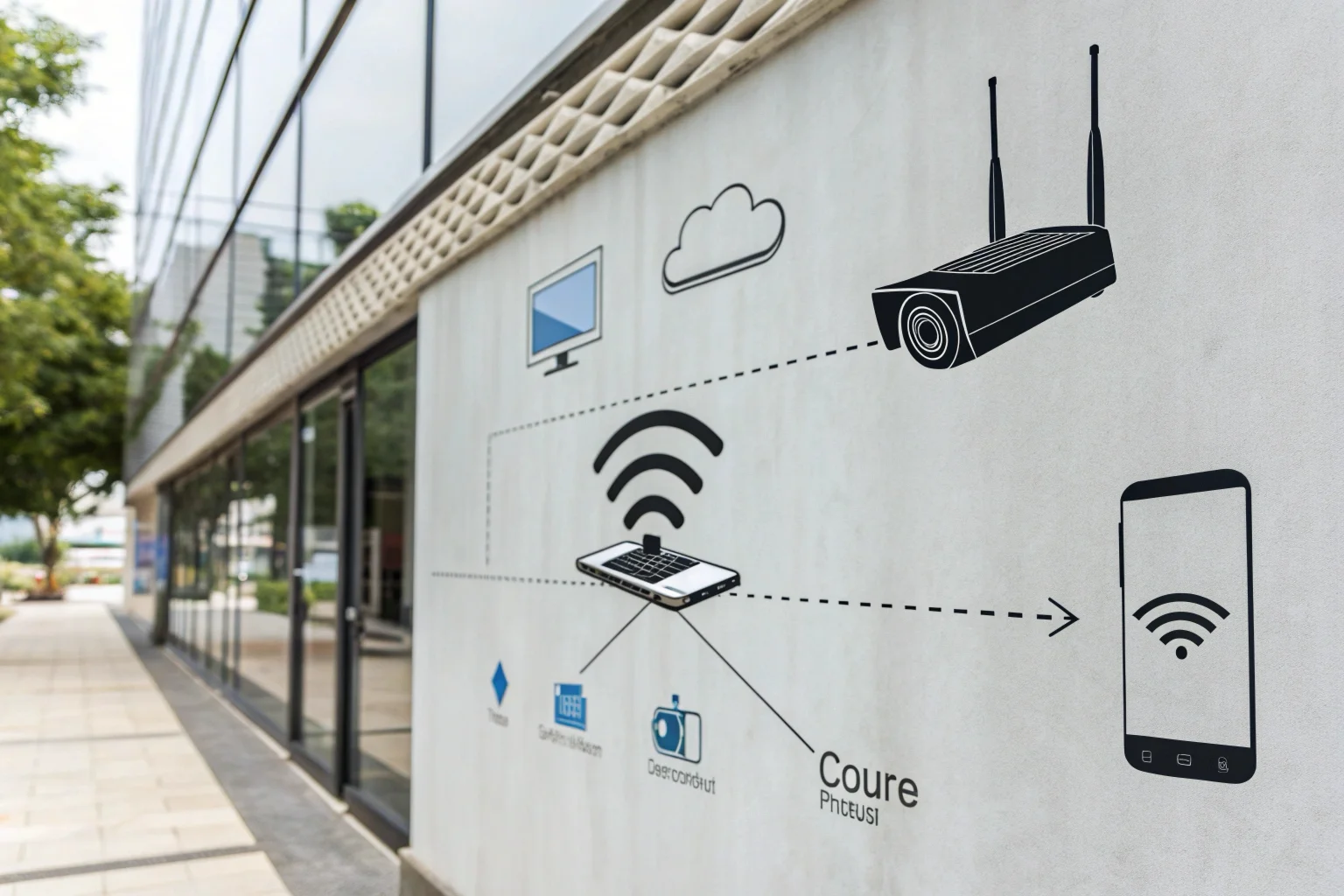
This distinction is more than just technical jargon; it directly impacts how your customer will use the product. I had a conversation with a potential client in France, Agnieszka, who was looking for a solution for a small retail space. She didn't need to check the feed from home; she just wanted a camera in the back room that fed to a monitor at the front counter without running wires. A simple, non-Wi-Fi wireless camera was perfect for her. It operates on its own frequency, so it doesn't even need an internet connection to work. On the other hand, most of my B2C e-commerce clients, like Piotr, sell almost exclusively Wi-Fi cameras. Their customers want the ability to check in on their home or office from their phone while on vacation.
Use Case: When to Choose Which
A traditional wireless camera system is a closed circuit. It's great for on-site, real-time monitoring where remote access isn't needed. They are often simpler to set up and aren't dependent on the quality of a Wi-Fi network. A Wi-Fi camera is all about remote access and smart features. It connects to a home or business network and uses an app for viewing, recording, and receiving motion alerts. This is the more popular option for modern consumer use.
The Reliability Factor
The reliability of a Wi-Fi camera is tied to the user's internet connection and the quality of the camera's app. This is where we, as a supplier, have to be extra diligent. We can't control our customer's Wi-Fi, but we can ensure our hardware and software are top-notch. We rigorously test our cameras' connectivity and app stability to prevent the kind of problems that make customers want to return a product. By providing clear instructions and having a support team ready, we help our retail partners, who then help the end-user have a smooth experience. It builds a chain of trust from our factory all the way to the person using the camera.
Conclusion
Choosing the right mini camera isn't about size; it's about certified security and a reliable partner. Don't compromise on quality. Let's build a trustworthy and profitable business together.

 English
  Italiano
  Deutsch
  Français
  Español
  Polski