
Businesses are bleeding inventory and intellectual property, but conventional CCTV is too obvious, and cheap spy pens overheat or record grainy, useless footage when it matters most. By sourcing properly engineered pen cameras, you can secure airtight, undeniable evidence without disrupting the workplace environment.
A spy pen camera is a discreet, fully functional writing instrument embedded with a micro-lens and battery. It covertly records high-definition audio and video directly to an internal or removable SD card, making it an essential tool for frontline corporate security and private investigations across Europe.
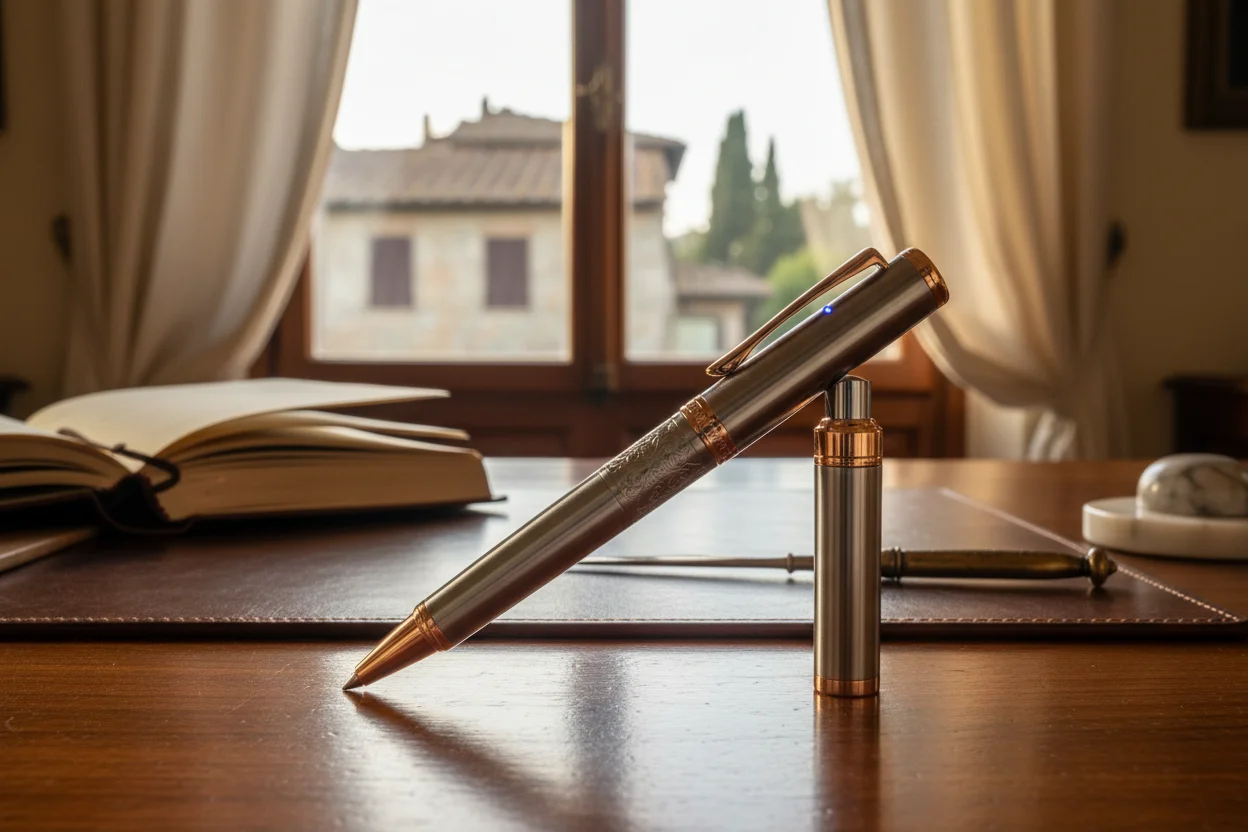
I’ve spent years navigating the factory floors in Shenzhen and now oversee our local assembly and technical QA teams right here in Italy. Let me be upfront: the European B2B market is flooded with gadgets that look great on a spec sheet but fail miserably in the field. If you’re supplying private investigators, retail loss prevention teams, or independent B2C sellers, you already know the headaches of customer returns. Today, we’re cutting through the noise to discuss how a well-engineered spy pen actually secures businesses.
How does a spy pen work?
Most buyers assume all spy pens are identical inside, only to face infuriating battery drain issues or corrupted files that render the evidence entirely useless. The solution lies in superior PCB design and efficient heat dissipation built into the chassis.
Spy pens operate using a miniaturised CMOS sensor and a micro-lithium battery, cleverly concealed within the pen’s barrel. When activated via a single, discreet button press, the device captures video and audio, encoding it in real-time onto a hidden MicroSD card for later retrieval via USB.
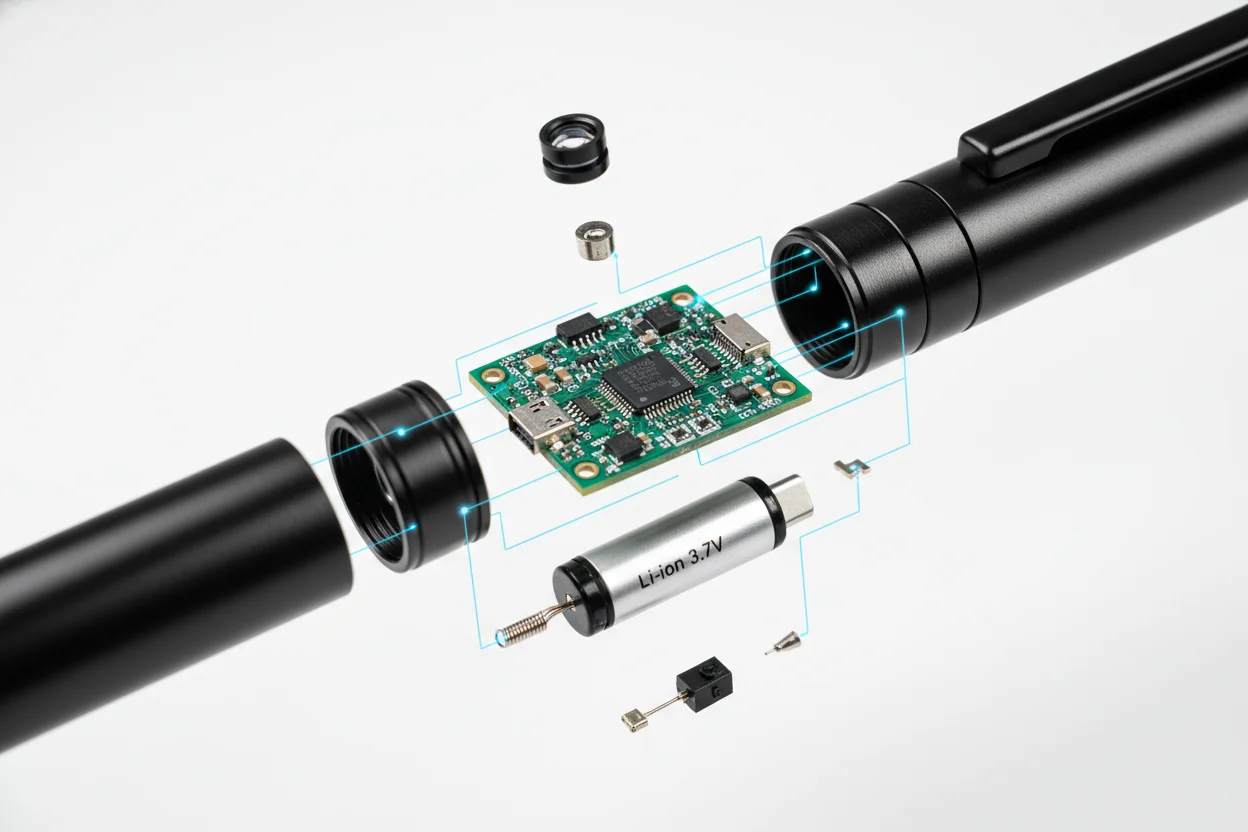
Let’s dive into a recurring nightmare I see on specialized CCTV forums: the dreaded “overheating crash.” A typical complaint from European retailers is that compact devices get notoriously hot, causing the internal processor to throttle and corrupt the video file right in the middle of a crucial recording. From my experience managing QA, this happens because cheap manufacturers cram standard components into a tight metal tube with zero thermal management.
At QZT, my team in Italy tests these limits relentlessly. We encountered a scenario where a client’s older batch of compact cameras suffered from frame-dropping because the processors couldn’t handle sustained 1080p recording without overheating. We solved this by pushing a highly optimised firmware update that manages power draw more efficiently, paired with a physical chassis redesign that acts as a heat sink. Furthermore, to ensure data integrity, we always recommend pairing these devices with cards that meet the SD Association’s Video Speed Class standards to prevent write-errors during covert operations.
How far can a spy camera see?
Clients often expect Hollywood-level zoom from a 1mm lens, which quickly leads to disappointment when faces are unrecognizable from across a warehouse. Managing focal expectations and understanding sensor limitations is key to keeping your end-users satisfied.
A standard spy pen camera provides clear, identifiable facial recognition at a distance of 3 to 5 metres in well-lit conditions. Due to the fixed-focus nature of micro-lenses, objects beyond 8 metres will appear increasingly soft and lack fine detail.

I frequently see independent European B2C sellers taking a hit on their margins because end-users return products citing “blurry video.” The gritty reality is that a pinhole lens requires optimal lighting. If a user tries to record the far end of a dimly lit conference room, the sensor artificially boosts the ISO, resulting in heavy digital noise.
In our Italian facility, we manually spot-check lens calibration. A common issue we catch before dispatch is slight misalignment caused during transit from Asia, which can throw the fixed focal point entirely off. By having a localized QA team, we recalibrate and test the depth of field on models like our W8 pen camera, ensuring that when your client records a face at 4 metres, the evidence is sharp enough to hold up under scrutiny.
Which is the best spy camera on the market?
Buyers are paralyzed by thousands of identical-looking options, often falling victim to “fake 1080p” upscaled resolution that ruins their reputation with premium clients. To win in this market, you must source devices with native HD sensors and stable firmware.
The best spy camera balances true resolution, battery stability, and discreet operation. Currently, the W8 model stands out for its native 1080p sensor, reliable 30fps frame rate, and a concealed lens design that passes strict visual inspection even under close scrutiny.

There is a dirty secret in our industry that I despise: upscaling. I’ve handled cases where wholesale clients came to us after their previous supplier provided “1080p” devices that were actually 720p sensors stretched out via software. The B2B forums are full of integrators furious over this exact scam.
When a European client is paying for quality, they expect every pixel to count. Our QA protocol dictates that we analyze the raw video output metadata. When firmware glitches cause resolution drops—something we’ve successfully patched for other compact modules in the past—we issue seamless local updates. If you are serious about your inventory, you should also be exploring our professional surveillance cameras which undergo the exact same rigorous native-resolution testing.
What are the suggested uses of a pen spy camera?
Corporate buyers struggle to justify the ROI of covert tech without clear use cases, while simultaneously fearing privacy law violations. Providing your clients with legally compliant, practical applications transforms you from a hardware peddler into a security consultant.
Pen cameras are primarily used for gathering HR compliance evidence, documenting internal theft in retail backrooms, conducting mystery shopping, and recording verbal contracts during high-stakes negotiations where standard recording devices would disrupt the natural flow of conversation.

Navigating the European market means respecting strict privacy laws. You cannot just sell a covert device without understanding the context in which it will be used. Retailers constantly ask me how to position these products for corporate clients. I always advise them to focus on “authorised compliance monitoring.”
For instance, we’ve seen a surge in demand from premium European markets where logistics companies use these pens to audit their own sorting facilities after a spike in missing high-value goods. The beauty of the pen form-factor is that it naturally belongs on a warehouse manager’s clipboard. However, I always remind our B2B partners to educate their end-users on adhering to the EU General Data Protection Regulation (GDPR) regarding employee consent and data storage when deploying covert surveillance in the workplace. Providing this level of consultative value is what builds long-term, high-frequency partnerships.

 English
  Italiano
  Deutsch
  Français
  Español
  Polski