
How to Choose a Voice Activated Recorder for Evidence
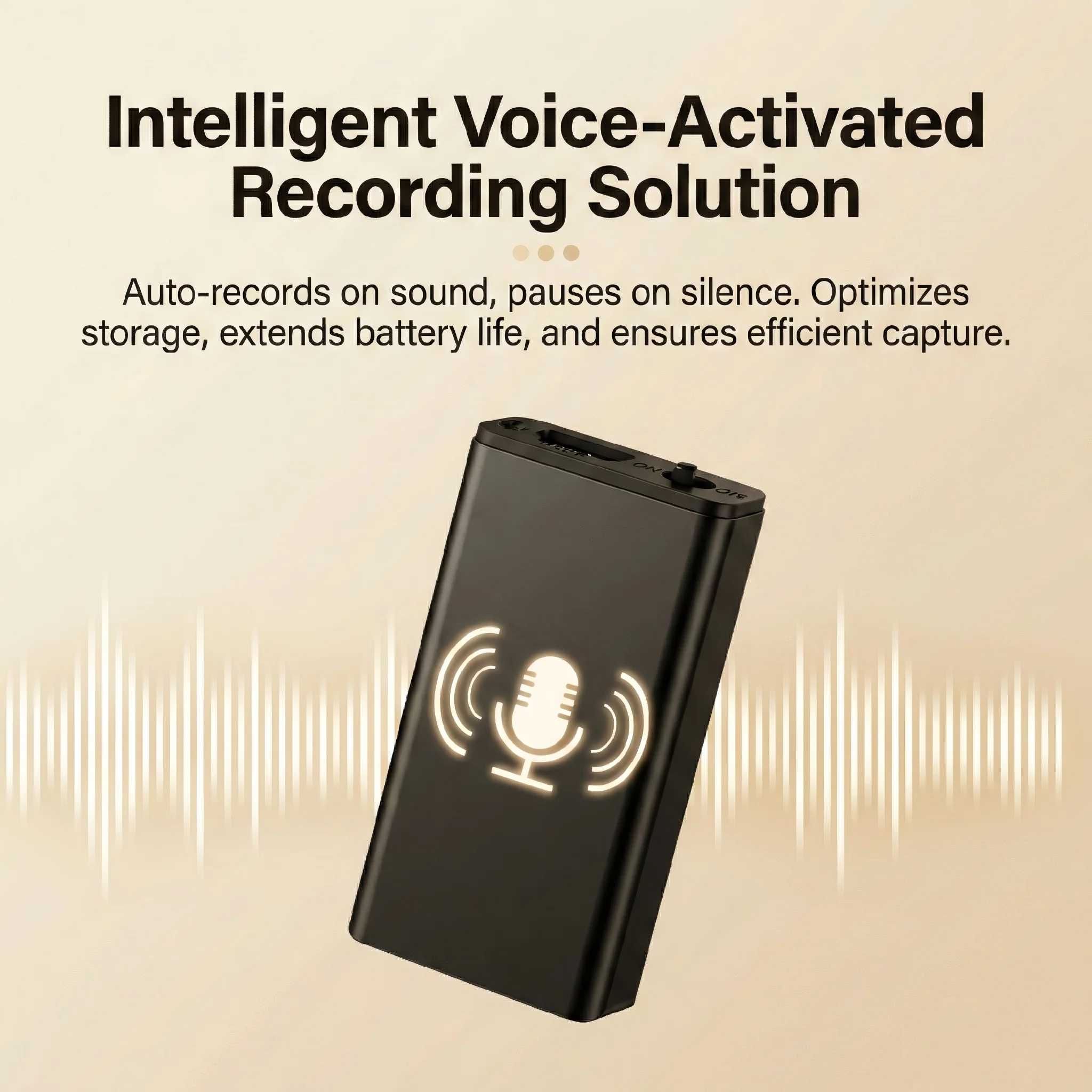
A voice activated recorder (VAR) automatically begins recording when it detects sound and pauses when the environment goes quiet. This smart feature conserves battery and storage while ensuring you never miss important conversations, meetings, or interactions.
What Is a Voice Activated Recorder and How Does It Work
Voice activated recorders use a sound detection threshold — when ambient noise exceeds this level, recording starts automatically. When sound drops below the threshold, recording pauses after a brief delay. This cycle continues as long as the recorder has power.
The result is a file full of only relevant content — meetings, conversations, and speech — with silence removed. This makes playback faster and storage more efficient than continuous recording.
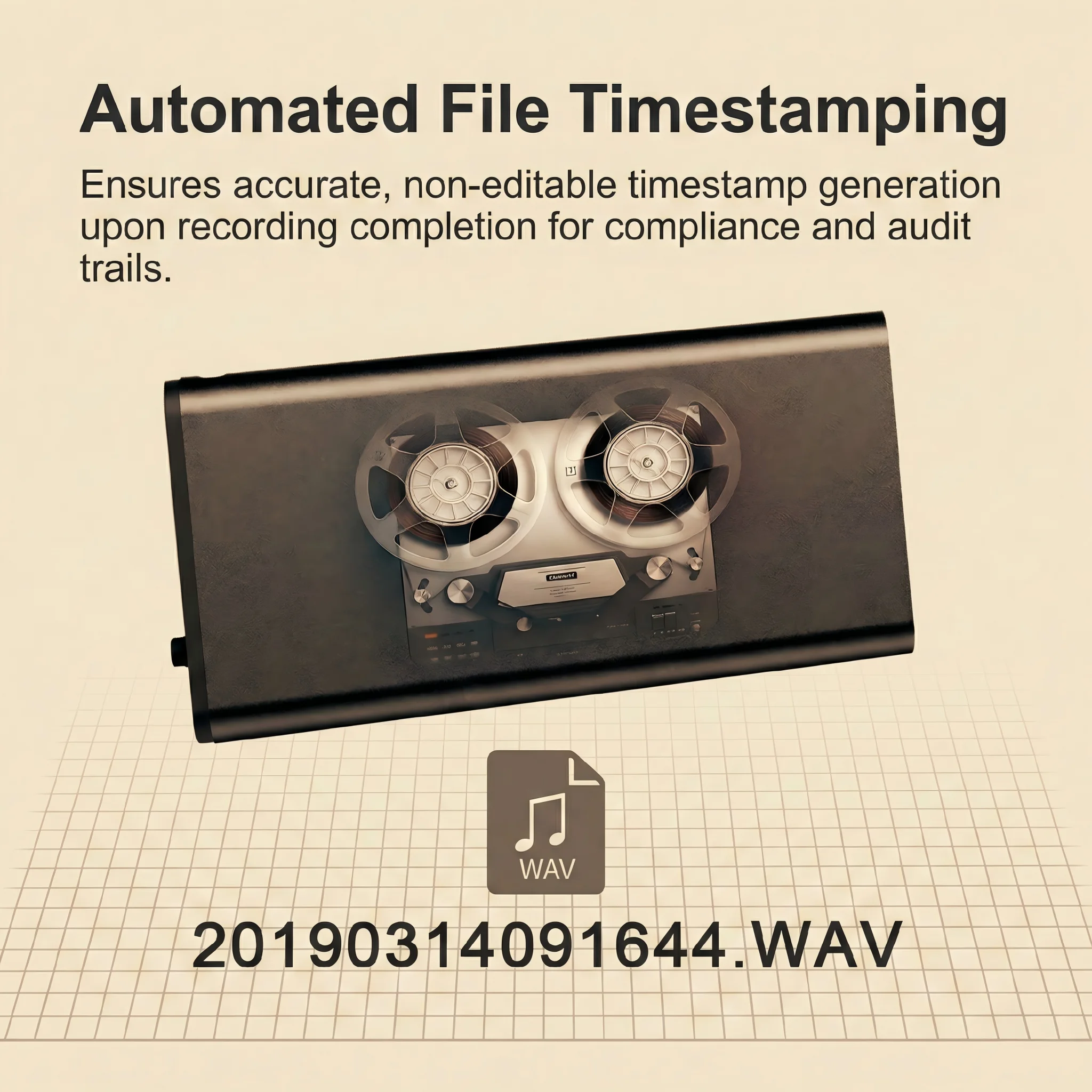
Most modern voice activated recorders store audio as MP3 or WAV files on internal memory or a microSD card. Files are typically timestamped and numbered automatically for easy organization.

Why Voice Activated Recording Matters for Evidence Collection
When recording for legal or evidentiary purposes, voice activation offers significant advantages:
No missed moments. If you leave a recorder running in a room, voice activation ensures it captures all conversations — even if you’re not present to monitor it.
Efficient storage. A standard 8-hour meeting might only produce 3–4 hours of actual speech. Voice activation can double your effective recording capacity.
Longer battery life. Not recording during silence extends battery life dramatically — some recorders last 200+ hours in voice activation mode versus 20–30 hours in continuous mode.
Easier evidence review. Timestamped files containing only relevant audio are much easier to review than hours of silence-filled recordings.
Key Specifications to Compare When Buying a Voice Activated Recorder
Audio quality (bitrate). For evidence purposes, higher is better. 192kbps MP3 or WAV (uncompressed) recordings are clear enough for transcription and legal use. Avoid recorders that only offer 64kbps or lower.
Microphone sensitivity. Look for omni-directional microphones that capture sound equally from all directions. For meeting rooms, omnidirectional mics ensure you capture all participants regardless of seating.
Noise reduction technology. Digital Signal Processing (DSP) filters background noise, wind, and hum to isolate speech. This is critical for recordings made in noisy environments.
Storage capacity. 8GB internal memory stores approximately 200–300 hours of MP3 audio. 32GB or 64GB cards can hold thousands of hours.
Battery life. In voice activation mode, look for 200+ hour standby. Continuous recording mode should offer at least 15–20 hours.
File format. WAV (uncompressed) provides the highest quality but larger file sizes. MP3 at 192kbps is a good balance of quality and storage efficiency.
How to Set Up a Voice Activated Recorder for a Meeting
Setting up a voice activated recorder before a meeting is straightforward:
1. Charge the device fully — most modern recorders charge via USB-C or micro-USB
2. Insert a microSD card if using expandable storage
3. Enable voice activation mode in the settings menu
4. Set the activation sensitivity level — higher sensitivity triggers on quieter sounds
5. Set the file format to WAV or 192kbps MP3 for evidence-quality recordings
6. Test by speaking at the distance you expect to place the recorder
7. Place the recorder where it will capture all participants — near the center of a table is ideal
8. Start voice activation mode before the meeting begins
The recorder will handle the rest automatically — starting when speech is detected and pausing during silence.
What Are the Best Positions for Placing a Voice Recorder
Placement dramatically affects recording quality:
Meeting table center: The ideal position for capturing all participants in a conference room or business meeting. Place flat or at a slight angle toward the primary speaker.
Desk or shelf near conversation: For office or home recordings, positioning the recorder on a desk at waist height captures speech more clearly than floor or ceiling placement.
Shirt or jacket pocket: Many voice recorder pens and compact recorders fit naturally in a breast pocket. The microphone should face outward.
Bag or briefcase: Compact recorders can be placed in an open bag. Performance is reduced through fabric but sufficient for nearby conversations.

How to Ensure Recordings Are Admissible as Evidence
Recording laws vary by country and jurisdiction. In the United States, recording laws fall into two categories:
One-party consent states: Only one person in a conversation needs to consent to the recording — and that person can be the one making the recording. This applies in most US states.
Two-party (all-party) consent states: All parties in the conversation must consent to being recorded. These states include California, Florida, Illinois, and several others.
General tips for legal compliance:
– Always research the recording laws in your specific state or country before recording
– When in doubt, disclose that you are recording
– For court use, consult an attorney about the admissibility of your specific recording
– Timestamps, original files, and chain of custody documentation strengthen evidentiary value
How Long Can a Voice Activated Recorder Store Audio
Storage duration depends on three factors: storage capacity, audio format, and recording frequency.
| Storage | 128kbps MP3 | 192kbps MP3 | WAV (Uncompressed) |
|---|---|---|---|
| 8GB | ~140 hours | ~93 hours | ~12 hours |
| 32GB | ~550 hours | ~370 hours | ~48 hours |
| 64GB | ~1,100 hours | ~740 hours | ~96 hours |
For most evidence-collection purposes, 32GB storage with 192kbps MP3 recording provides an excellent balance of quality and capacity.
Tips for Getting Clear Audio in Challenging Environments
Outdoor recordings: Wind noise is the enemy. Use a foam windscreen if available, or position the recorder where it’s shielded from wind direction.
Large rooms: Omnidirectional microphones work best, but distance is still a limiting factor. In rooms larger than 15 feet across, consider placing the recorder centrally rather than on one side.
Noisy environments: Enable DSP noise reduction and increase the voice activation sensitivity so the recorder doesn’t mistake background noise for speech.
Phone or video calls: Some recorders can be connected directly to a phone’s headphone jack via an adapter cable to record calls at high quality.
How to Transfer and Manage Voice Recordings
Most voice recorders connect to computers via USB as a mass storage device:
1. Connect the recorder to your computer with the included USB cable
2. The device appears as a removable drive
3. Copy audio files to a folder on your computer for backup
4. Files are typically organized in dated folders with timestamped filenames
5. Play back files using any audio player (Windows Media Player, VLC, iTunes)
6. For transcription, use software like Otter.ai or Rev.com to convert speech to text automatically
Always maintain original files — never delete them after copying. Courts may require original files with metadata intact.
Conclusion
A quality voice activated recorder is an invaluable tool for documentation, evidence collection, business meetings, and personal protection. The key factors to prioritize are audio quality (192kbps or higher), DSP noise reduction, battery life in voice activation mode, and adequate storage capacity. Before recording in any context, always verify the recording laws applicable in your jurisdiction. With the right device and proper placement, a voice activated recorder delivers clear, organized, and legally defensible audio documentation.
FAQ
How sensitive is voice activation mode?
Most recorders allow you to adjust sensitivity in settings. Higher sensitivity triggers on quieter sounds; lower sensitivity requires louder sounds to start recording.
Can I use a voice activated recorder in court?
Yes, in jurisdictions where the recording was made legally. Consult an attorney about specific admissibility requirements in your case.
How do I know the recorder is capturing everything?
Test in advance: place the recorder where you plan to use it, walk around the room speaking at normal volume, then play back to verify coverage.
What’s the difference between a voice recorder and a dictaphone?
Dictaphones are designed for dictation — single speaker, close range, high quality. Voice activated recorders are designed for ambient recording of conversations, often at greater distances.
Can a voice activated recorder record phone calls?
Not directly without an adapter. However, you can use a recording adapter cable (3.5mm to 3.5mm) to connect the recorder to your phone’s headphone jack during a call.

 English
  Italiano
  Deutsch
  Français
  Español
  Polski