
How to Use a Magnetic Voice Recorder 500H for Long-Term Surveillance
The Magnetic Voice Recorder 500H is designed for one specific purpose: recording for as long as possible without any human intervention. With up to 288 hours of standby time, integrated neodymium magnets for tool-free installation under vehicles or inside metal enclosures, 32GB of storage, and voice-activated recording, it’s purpose-built for surveillance applications that require days or weeks of unattended operation.
This guide explains how the 500H works, how to deploy it effectively, and how to get the best recordings from extended covert operations.
What Is the Magnetic Voice Recorder 500H?

The 500H is a specialized long-duration voice recorder distinguished by three key features that set it apart from standard recorders:
1. Neodymium magnet mount: Strong built-in magnets allow instant, tool-free attachment to any ferromagnetic surface—car undercarriages, metal beams, filing cabinets, equipment chassis
2. 288-hour standby capacity: The large integrated battery provides up to 12+ days of standby with VOR active, or up to 100+ hours of continuous recording
3. 32GB internal storage: Stores up to 500+ hours of audio at efficient compression settings, ensuring you never run out of space before battery runs out
The “500H” designation refers to the rated total audio capture capacity when using VOR with efficient compression: 500 hours of actual recorded audio across multiple charge/deploy cycles.
Specifiche tecniche di base
Battery and Recording Duration
The 500H’s defining specification is its battery life:
| Modalità | Duration |
|---|---|
| Continuous recording (192kbps) | 100–120 hours |
| VOR standby + recording | 200–288 hours |
| Standby only (device on, waiting) | 288+ hours |
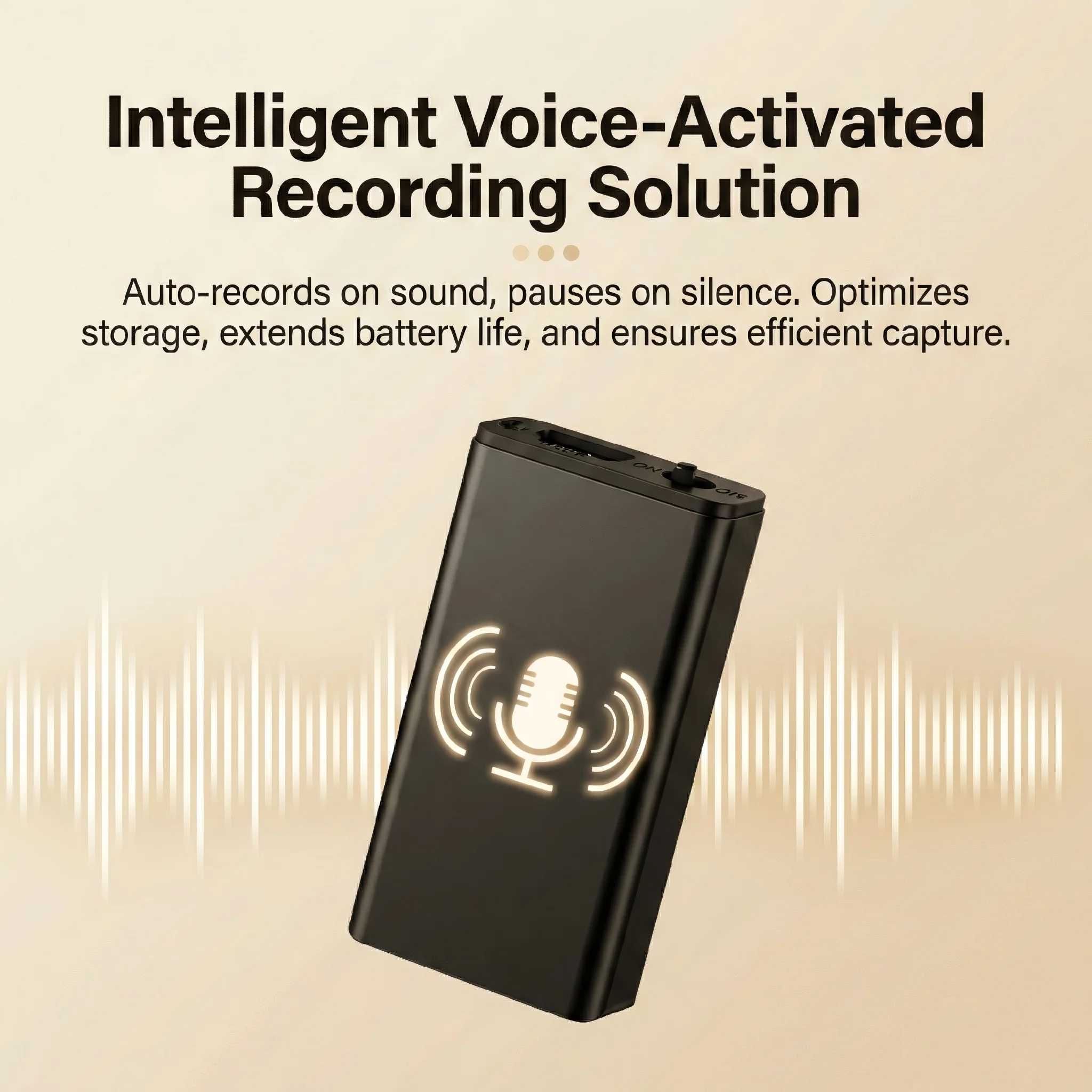
In VOR mode, the recorder conserves battery by powering down the microphone during silence. In a typical surveillance scenario—an office, vehicle, or room with periodic conversations—VOR mode provides 2–3× the effective deployment time compared to continuous recording.
For vehicle tracking scenarios, where conversations may be infrequent, the 288-hour standby means the device can sit magnetically attached under a vehicle for up to 12 days without recharging.
Capacità di archiviazione

With 32GB of internal storage:
| Qualità di registrazione | Capacità di archiviazione | Recording Hours |
|---|---|---|
| 192kbps MP3 | 32 GB | ~375 hours |
| 128kbps MP3 | 32 GB | ~550 hours |
| 64kbps (voice) | 32 GB | ~1,100 hours |
At 64kbps (voice-optimized quality)—which is fully adequate for clear voice recording—32GB holds over 1,100 hours of audio. Combined with VOR mode, the battery will deplete long before storage fills. You never need to worry about storage management during deployment.
Neodymium Magnetic Mount
The integrated neodymium magnets are rated at several kilograms of holding force—far more than the device’s weight. This means:
– Instant installation: Press against any steel or iron surface. No tools, no adhesives, no preparation.
– Vibration resistance: Strong magnetic grip maintains contact during vehicle movement, vibration, and minor impacts
– Easy removal: Despite strong holding force, the device can be removed by hand with a firm tug or sliding motion
– No surface damage: Magnets leave no adhesive residue or marks on metal surfaces
The magnetic design is particularly valuable for vehicle undercarriage deployment—you can attach the device in seconds and retrieve it just as quickly.
Setting Up the 500H for Deployment
Effective deployment requires several preparation steps:
Step 1: Charge Fully
Connect via USB-C and charge to 100% before deployment. A full charge from empty typically takes 4–6 hours for the large battery. The LED indicator changes when charging is complete.
Step 2: Configure VOR Settings
In the device menu (accessible via the physical button interface), set VOR sensitivity appropriate for your deployment environment:
– Low sensitivity: Triggers only on close conversation (within 3–5 feet). Ideal for office or room deployment.
– High sensitivity: Triggers on quieter sounds and more distant speech. Useful for large open spaces.
Step 3: Set Audio Quality
Choose recording quality based on your priorities:
– 192kbps for highest voice quality (legal evidence, professional use)
– 64kbps for maximum recording duration (standard voice quality, over 1,000 hours capacity)
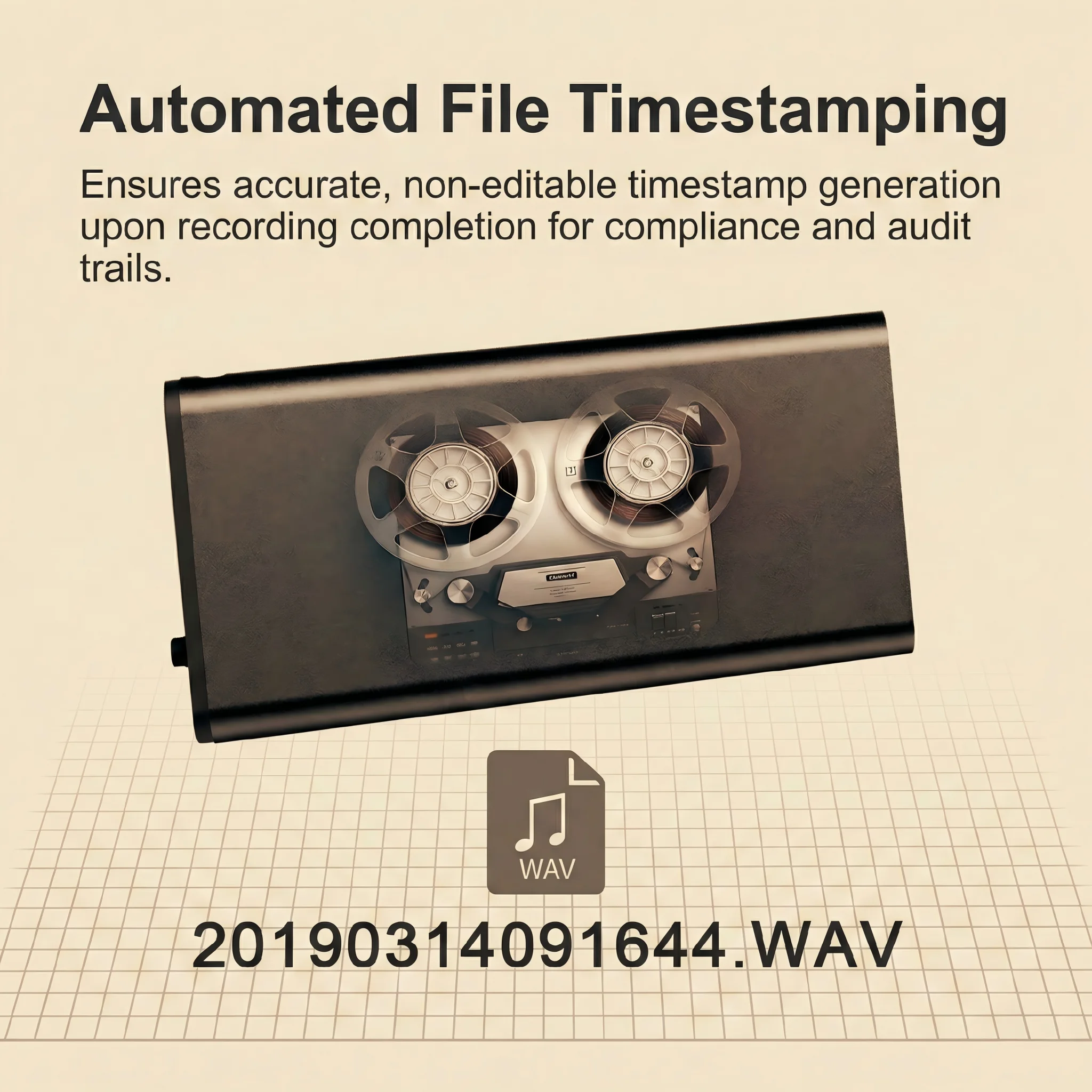
Step 4: Set Date and Time
Accurate timestamps are critical if recordings will be used as evidence. Set the device clock to current date and time before deployment.
Step 5: Test Activation
Before deploying to the target location, test VOR activation in a similar audio environment. Speak from the expected distance and verify the LED indicates recording has started within 1 second.
Step 6: Install
For magnetic deployment: approach the target surface, press firmly, verify the device is secure. For vertical surfaces, press then give a slight upward push to set the magnet firmly.
Optimal Deployment Locations
Vehicle Undercarriage
The classic use case for magnetic recorders. The device attaches to metal structural components (frame rails, floor pan brackets, exhaust system heat shields) and records conversations inside the vehicle.
Tips for vehicle deployment:
– Choose a location away from exhaust pipes and heat sources (heat degrades battery)
– Position the microphone end facing toward the vehicle interior for best audio pickup through the floor
– Avoid wheel wells and locations subject to direct water spray
– Check for any non-magnetic (aluminum or plastic) construction in your target location—only steel/iron surfaces hold the magnets
Under Office Furniture
Metal desks, filing cabinets, and server racks accept the magnetic mount instantly. Placing the device on the underside of a metal desk surface positions it 2–4 inches from conversations while being completely out of normal sight lines.
Inside Equipment Enclosures
Metal electrical panels, industrial equipment housings, and similar enclosures provide both a mounting surface and concealment. The device inside a metal enclosure records sound conducted through the enclosure structure as well as any audio that enters through ventilation openings.
Behind Metal Wall Features
Steel beams, metal wall studs (accessible in unfinished areas), and metal door frames all provide magnetic mounting surfaces for placing the device behind walls or in concealed structural spaces.
Retrieving and Reviewing Recordings
After retrieval, accessing recordings follows the same process as other USB recorders:
1. Connect via USB-C: Mounts as removable storage
2. Browse the recording folder: Files are organized by date, with automatic timestamps
3. Copy to computer: Transfer relevant files
4. Review and filter: Use audio software to navigate to specific time segments
For long deployments with hundreds of hours of VOR-triggered recordings, audio review software that displays waveforms can dramatically speed up the review process—silent periods (not recorded) are absent, so every stored segment contains audio activity.
Audio Quality Management
For extended deployments, audio quality depends heavily on:
Microphone placement relative to sound source: Every 3 feet of distance degrades voice clarity. Within a vehicle, floor placement typically captures good audio; outside a vehicle, only very loud conversations inside will be audible.
Background noise levels: Constant background noise (engine noise in a moving vehicle, HVAC in an office) reduces effective voice capture range. DSP noise reduction on the 500H helps filter these constant noise sources.
Enclosure effects: Recording from inside a metal enclosure or from under a vehicle introduces acoustic coloration. Voice recordings made through material obstructions are often lower quality than direct recordings. Factor this into your expectations for the application.
Battery and Storage Management for Extended Deployments
For deployments longer than 5 days, consider these strategies:
Split deployments: Deploy the recorder for 5–7 days, retrieve, download recordings, recharge fully, and redeploy. This ensures maximum battery reserve and allows you to review findings periodically.
VOR optimization: The single biggest lever for extending deployment duration is VOR threshold calibration. A properly calibrated VOR threshold in a quiet environment can result in 5× longer deployment time compared to continuous recording.
Temperature effects: Battery performance degrades in cold weather. At temperatures below 32°F (0°C), expect 20–30% reduction in battery capacity. Factor this into deployment duration calculations.
Considerazioni legali
Magnetic voice recorders present specific legal complexities:
Placement on vehicles: In many jurisdictions, placing recording devices on vehicles you don’t own—even temporarily attached—may constitute unlawful surveillance or wiretapping. Professional investigators typically require appropriate legal authority (court orders, consent) before vehicle-based audio surveillance.
Private investigation licensing: Using audio recording devices for surveillance of others typically requires professional licensing as an investigator in most US states and many countries.
Evidence admissibility: Recordings intended for use as legal evidence must be obtained in compliance with applicable evidence rules, which vary by jurisdiction. Improperly obtained recordings may be inadmissible and the recorder may face criminal liability.
Consult legal counsel before deploying any recording device for surveillance purposes beyond your own property.
Domande frequenti
Q: How waterproof is the 500H for vehicle undercarriage use?
A: Most versions have water-resistant but not fully waterproof construction. They can handle splash, rain spray, and humidity. They should not be submerged or deployed where they’ll be continuously soaked (near leaking water sources). For vehicle undercarriage use, avoid positioning near wheel wells that receive direct road spray.
Q: Can I monitor recordings remotely in real-time?
A: No. The 500H is a standalone recorder with no WiFi or cellular connectivity. All recordings are stored locally and must be retrieved physically to be reviewed.
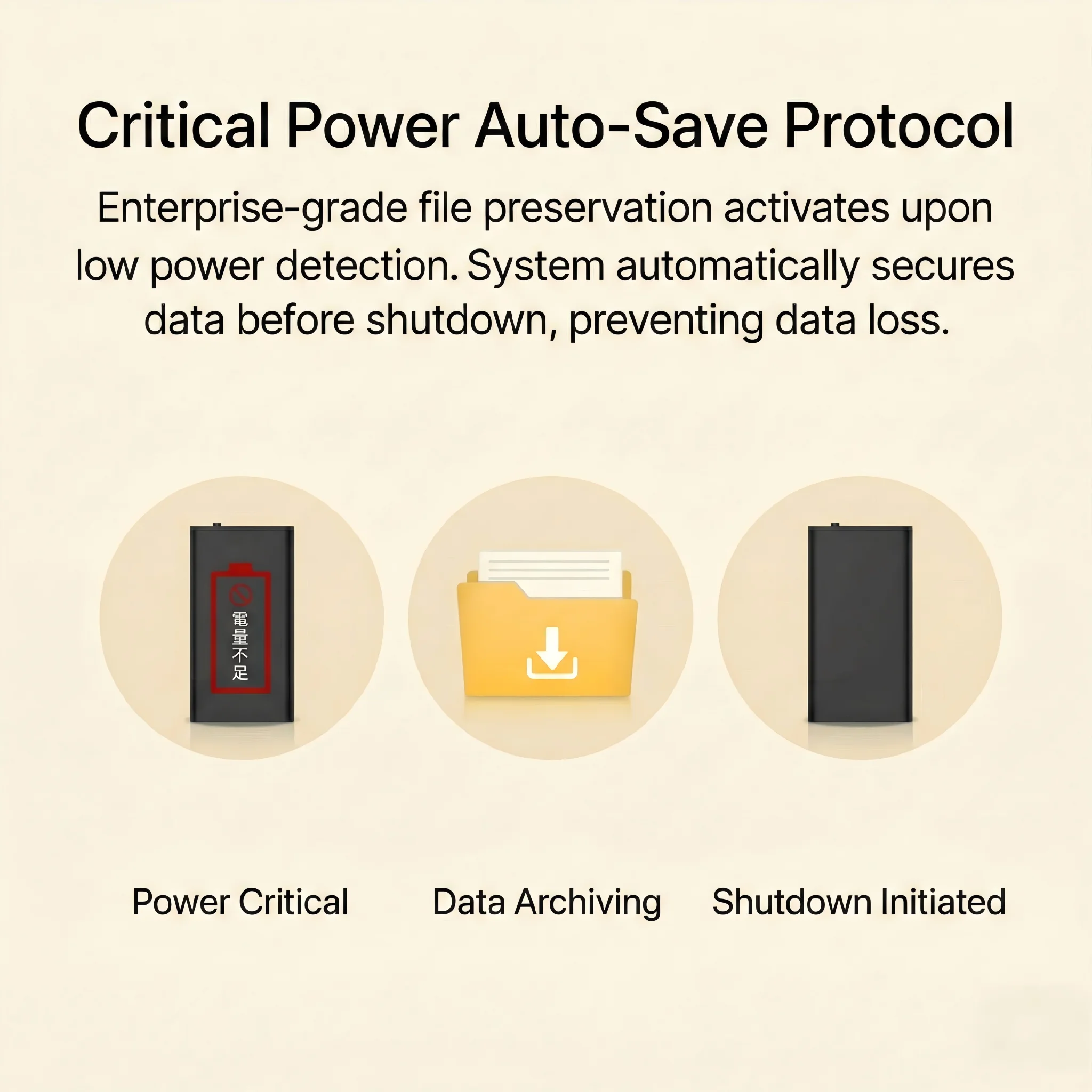
Q: What happens if the battery dies during deployment?
A: The device auto-saves the current recording file before shutting down. No audio is lost. All previously completed recordings remain intact on the storage.
Q: Does the magnetic attachment leave any residue or marks on the target surface?
A: Neodymium magnets leave no adhesive residue. On very polished metal surfaces, prolonged contact may leave faint surface marks from vibration contact—this is minor and typically not visible except under close inspection.
Q: Can the device be detected by someone sweeping for recording devices?
A: The 500H generates minimal electronic emissions. Basic RF sweeping equipment will not detect a device with no wireless radio. Specialized non-linear junction detectors (NLJD) used in professional security sweeps can detect electronic components. Physical inspection of the area remains the most reliable detection method.
Conclusione
The Magnetic Voice Recorder 500H is purpose-engineered for exactly one job: long-duration, unattended surveillance in locations where magnetic attachment is possible. Its 288-hour standby capacity, 32GB storage, instant magnetic mounting, and VOR-optimized operation make it uniquely capable for vehicle surveillance, extended office monitoring, and anywhere that requires days of continuous covert operation without maintenance.
Before deploying, invest time in proper setup: charge fully, calibrate VOR sensitivity, set accurate timestamps, and test in similar acoustic conditions. Retrieve and review recordings at regular intervals rather than waiting for the battery to deplete. And above all, operate strictly within the legal framework applicable to your jurisdiction and use case—audio surveillance laws are strict and penalties for violations are severe.

 English
  Italiano
  Deutsch
  Français
  Español
  Polski