
Why 1080p is the Absolute Minimum for Your Business Security
Running a business is tough. You worry about security, but blurry camera footage won't help you identify a thief. Imagine a security incident happens, and the video is useless.
1080p resolution is the minimum standard for business security because it provides enough detail to clearly identify faces, license plates, and other critical information. Anything less, and you risk capturing footage that is inadmissible as evidence and useless for identifying individuals, making your investment worthless.

I've talked with hundreds of business owners, and the story is often the same. They start with a cheaper, low-resolution camera system to save money. But when they actually need the footage, it fails them. The details just aren't there. That's why I always advise my clients, like Piotr in Poland, that starting with 1080p isn't an upsell; it's the baseline for true security. It’s the difference between having a security system and just having security theater. Once we establish that, the next logical question is always about the infrastructure.
Should you choose a wireless or wired security camera system?
Choosing the wrong camera setup can be a costly mistake. You might face unreliable connections with a poor wireless system or deal with complex, expensive installation for a wired one.
The best choice depends entirely on your business. Wireless cameras offer incredible flexibility and simple installation, which is great for existing buildings. Wired systems provide unmatched reliability and security, making them a top choice for new constructions or high-security areas where stable connections are critical.
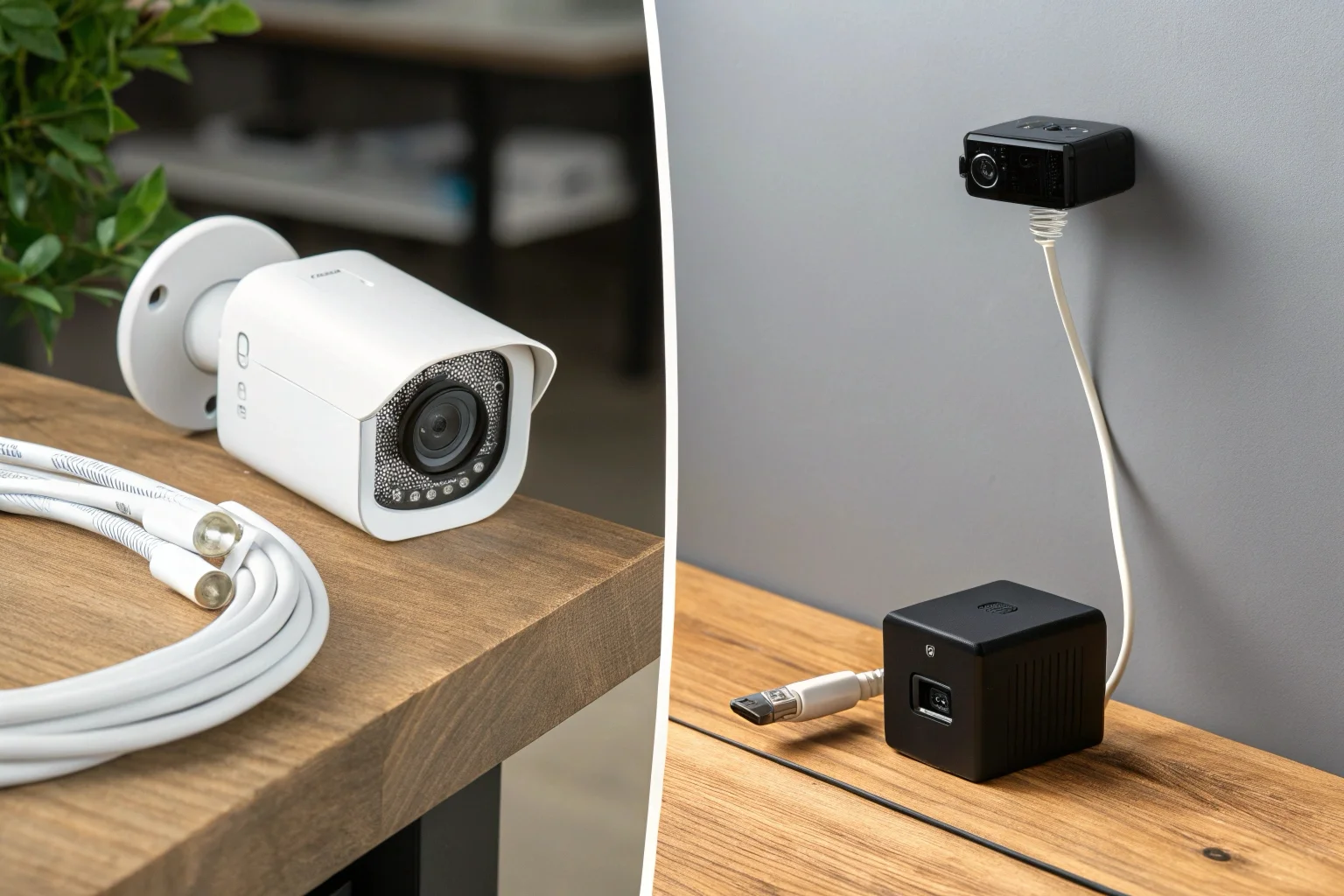
When I discuss this with clients, I try to get a feel for their specific location and needs. For an e-commerce business owner like Sossa in France who operates out of an older building, running new cables would be a nightmare. For him, a high-quality wireless system is perfect. He can place cameras exactly where he needs them without drilling through thick walls. On the other hand, for a larger retailer planning a new store, I would recommend a wired system. The investment in cabling during construction pays off with years of stable, worry-free operation. It really comes down to balancing convenience with reliability. Here’s a simple breakdown I use:
| Feature | Wired Camera System | Wireless (WiFi) Camera System |
|---|---|---|
| Reliability | Excellent. The physical connection is stable and not prone to interference. | Good. Depends on WiFi strength. Can be affected by other signals. |
| Installation | Complex. Requires running cables through walls and ceilings. | Simple. Only needs a power source. Can be set up in minutes. |
| Security | High. A closed circuit is very difficult to hack into remotely. | Good. Requires strong passwords and a secure network (WPA2/WPA3). |
| Flexibility | Low. Cameras are difficult to move once installed. | High. Can be easily moved as long as it's within WiFi range. |
What are the real advantages of using a WiFi security camera?
Are you dreading the thought of drilling holes and running messy cables through your office or warehouse? The disruption and cost can be a major headache for any business owner.
The primary advantage of a WiFi camera is its incredible ease of installation. You can place it almost anywhere you have a power outlet and a good WiFi signal. This gives you the flexibility to monitor specific areas and easily change camera locations as your business needs evolve.
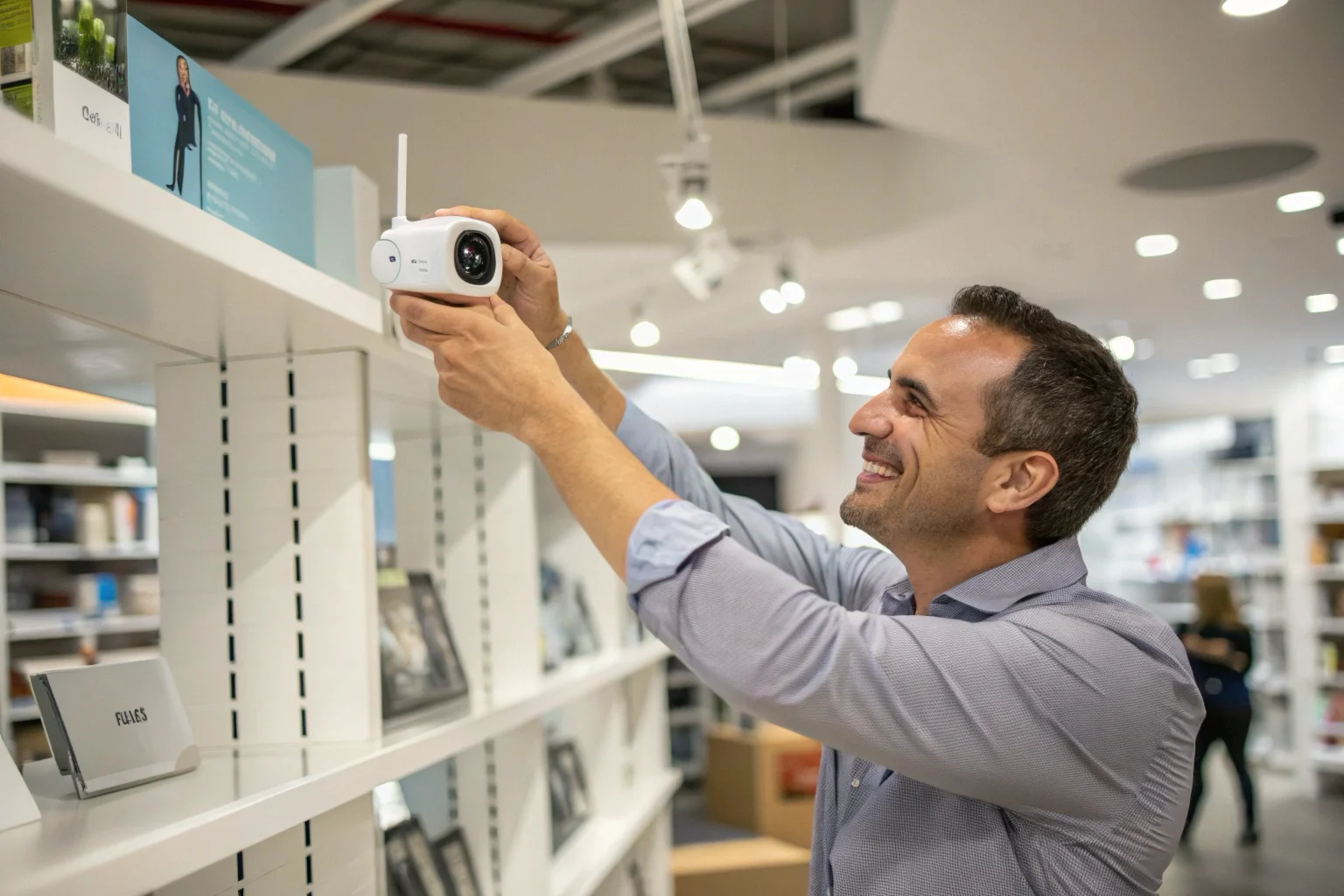
I remember working with Daniel, a client in Italy who runs a boutique retail store. He needed to watch over his new inventory display but didn't want to ruin the store's aesthetic with visible wires. We settled on one of our discreet WiFi hidden cameras. He was able to install it himself in under 15 minutes. A few weeks later, he rearranged his store and moved the camera to a new spot just as easily. This is the power of wireless.
Ultimate Flexibility
You are not tied to the location of an ethernet port. You can place cameras in the exact spots that give you the best view, whether that's on a high shelf, in a temporary stockroom, or even hidden inside another object using one of our Tuya DIY modules.
Cost-Effective Setup
For small to medium-sized businesses, the savings on installation can be huge. You don't need to hire a professional to run cables through your building. This makes securing your property much more affordable and accessible.
Smart Features and Remote Access
Most modern WiFi cameras, including ours, connect to an app on your phone. This means you can check in on your business from anywhere in the world. You get motion alerts, can view live footage, and manage your security system right from your pocket.
How long do wireless cameras actually last?
You're ready to invest in a wireless system, but you're worried the cameras will die in a year. The thought of constantly changing batteries or replacing units is a real concern.
A good quality wireless camera from a reliable manufacturer can last for many years. The physical camera hardware is very durable. The main component you'll need to consider is the rechargeable battery, which typically needs to be replaced or will see reduced performance after 1 to 3 years of use.
This is a topic I discuss often, especially with cautious buyers like Agnieszka. They understand that price often reflects quality. A cheap, uncertified camera might not last a year. That's why we focus on mid-to-high-end products and ensure they have the proper CE and ROHS certifications. These certifications aren't just for market access; they are a mark of quality and durability. They mean the product has been tested to meet high standards.
Hardware and Build Quality
The lifespan of the camera itself is determined by the quality of its components. We work with our factory in Vietnam to ensure our cameras can withstand years of continuous operation. A well-built camera should last 5 years or even longer.
Battery Life and Charging Cycles
The battery is the heart of a wireless camera. Like your smartphone, the battery's ability to hold a charge will decrease over time. Most security camera batteries are rated for several hundred charge cycles. For a camera in a high-traffic area that records frequently, you might need to recharge it more often, which will wear out the battery faster than a camera in a quiet area.
Environmental Factors
Where you place the camera matters. A camera placed outdoors and exposed to the harsh sun and rain in Italy will have a tougher life than one sitting on a shelf in an air-conditioned office in Germany. Always check the camera's operating temperature and weather resistance rating if you plan to use it outside.
Conclusion
In the end, securing your business comes down to clarity, reliability, and quality. 1080p is your starting point for clear footage, and choosing between wired and wireless depends on your specific needs.

 English
  Italiano
  Deutsch
  Français
  Español
  Polski