
Are you worried that using pen cameras in your business might violate GDPR? You're not alone. Many EU companies struggle to balance security needs with strict privacy laws. The fear of hefty fines—up to €20 million or 4% of annual revenue—makes compliance a top priority.
Pen cameras can be GDPR-compliant when used with proper legal basis, transparency, and data minimization. EU businesses must conduct a Legitimate Interest Assessment, inform employees/visitors of recording, limit data collection to what's necessary, and implement strict access controls and retention policies.

As someone who's worked with surveillance technology across European markets, I understand the compliance challenges you face. Let me guide you through the practical steps to use pen cameras legally in your business.
Is it legal to record audio on a security camera in Europe?
The short answer: audio recording is heavily restricted. Under GDPR and the ePrivacy Directive, recording conversations without consent is generally illegal. Most EU countries require explicit consent from all parties being recorded.
For businesses, this means:
- One-party consent countries (like Germany for certain cases): You may record if you're a participant
- Two-party consent countries: Everyone must agree to be recorded
- Workplace recording: Usually requires works council approval and clear signage
Best practice: Disable audio recording on your pen cameras unless you have explicit legal grounds and documented consent. Video-only recording faces fewer restrictions but still requires compliance measures.
What is the EU law on spy cameras?
The EU doesn't have specific "spy camera" laws. Instead, surveillance devices fall under several regulations:
- GDPR (General Data Protection Regulation): Governs all personal data processing, including video footage
- ePrivacy Directive: Specifically addresses electronic communications and monitoring
- National labor laws: Each EU country has specific workplace surveillance rules
- Criminal codes: Covering unauthorized recording in private spaces
Key principle: Proportionality. Any surveillance must be:
- Necessary for a legitimate purpose
- Limited to what's essential
- Balanced against privacy rights
- Transparent to those being monitored
Is it illegal to have a camera in your office?
Having cameras in offices is legal, but with important conditions:
Legal requirements:
- ✅ Clear business justification (security, theft prevention)
- ✅ Employee notification and consultation
- ✅ Visible signage in most jurisdictions
- ✅ Data protection impact assessment for high-risk processing
- ✅ Limited retention periods (typically 30-90 days)
Restricted areas:
- ❌ Break rooms and cafeterias
- ❌ Restrooms and changing areas
- ❌ Union meeting rooms
- ❌ Areas where employees have high privacy expectations
Works Council involvement: In many EU countries (Germany, France, Italy), workplace surveillance requires works council approval or at least consultation.
Can I use a spy camera in my business?
Yes, but "spy" implies hidden recording—which creates legal risks. Better approach: overt surveillance with discrete devices.
GDPR-compliant approach:
- Document your purpose: Why do you need recording? (Theft prevention, security, training?)
- Conduct Legitimate Interest Assessment: Balance your needs against privacy rights
- Inform everyone: Clear signage, employee handbook updates, visitor notifications
- Minimize data: Record only what's necessary, blur unrelated individuals
- Secure the data: Encryption, access controls, audit logs
- Set retention limits: Delete footage after the legal requirement period
- Train staff: Ensure operators understand privacy obligations

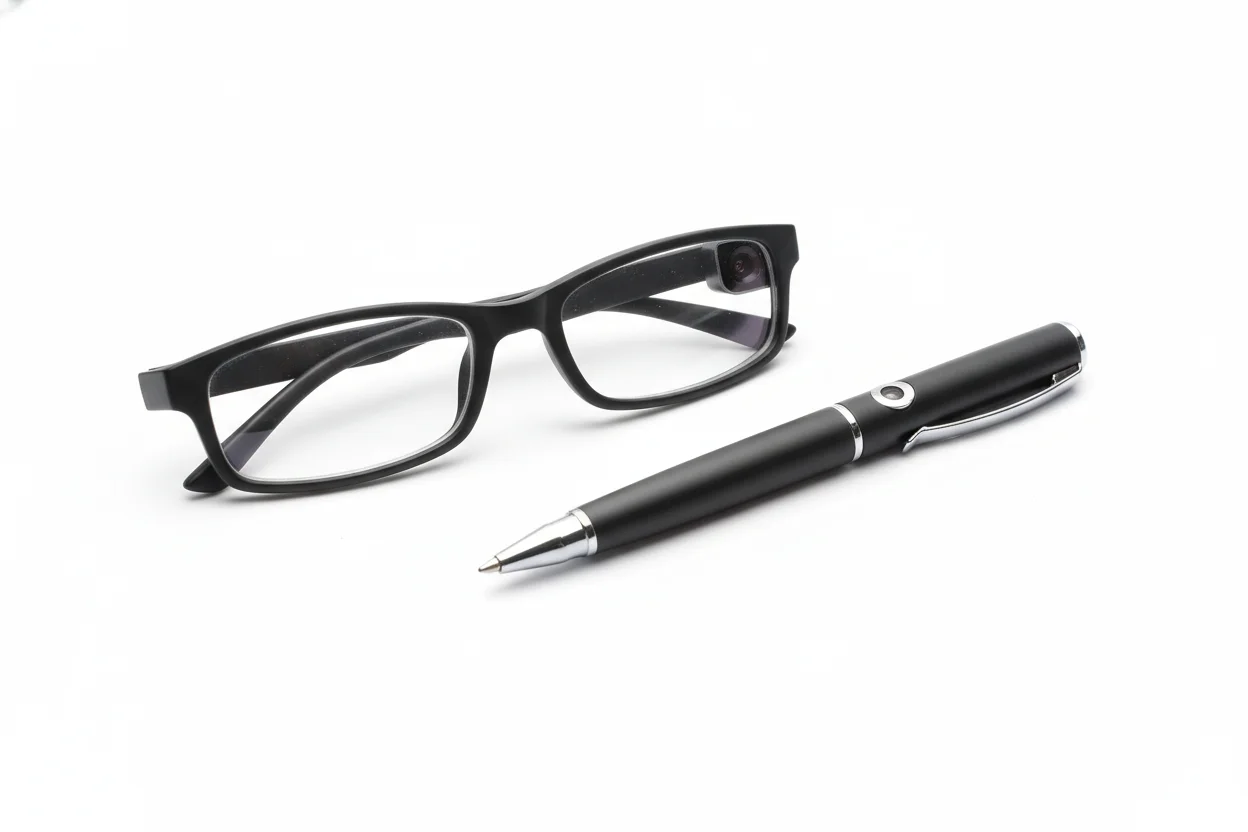
Pen Cameras vs. Spy Glasses: Compliance Comparison
| Cecha | Kamery piórkowe | Spy Glasses |
|---|---|---|
| Widoczność | Can be placed openly on desk | Worn on person, more covert |
| GDPR Risk | Lower (if used appropriately) | Higher (hidden nature) |
| Best for | Fixed location monitoring | Mobile surveillance needs |
| Notice requirements | Signage usually sufficient | May need explicit consent |
| Data control | Easier to secure stationary device | Higher risk of loss/theft |
Practical Compliance Checklist for EU Businesses
Before deploying pen cameras:
- [ ] Legal basis documented: Can you demonstrate legitimate interest or consent?
- [ ] DPIA completed: Data Protection Impact Assessment for high-risk processing
- [ ] Works Council consulted: Follow national labor law requirements
- [ ] Signage posted: Clear, visible notices about recording
- [ ] Privacy policy updated: Include video surveillance information
- [ ] Access controls set: Limit who can view/download footage
- [ ] Retention policy defined: Automatic deletion after set period
- [ ] Staff trained: Operators understand GDPR obligations
- [ ] Data subject rights process: How to handle access/erasure requests
Technical Features for GDPR Compliance
When selecting pen cameras for business use, prioritize these features:
Essential:
- Date/time stamping: For audit trails and evidence validity
- Szyfrowanie: Protect stored footage from unauthorized access
- Tamper detection: Know if devices are compromised
- Configurable resolution: Lower quality = less privacy intrusion
Recommended:
- Motion-activated recording: Minimizes unnecessary data collection
- Audio disable option: Avoid legal complications
- Secure deletion: Permanent erase functionality
- Audit logging: Track who accessed what footage when

Country-Specific Considerations
Germany: Very strict. Works council (Betriebsrat) approval usually required. Audio recording almost always prohibited without consent.
France: CNIL (data protection authority) must be notified of workplace surveillance. Strict proportionality requirements.
Włochy: Garante per la Protezione dei Dati Personali requires specific assessments. Union consultation often mandatory.
Spain: AEPD guidelines emphasize necessity and proportionality. Employee notification is critical.
Netherlands: AP (Autoriteit Persoonsgegevens) requires transparency. CCTV in workplaces needs careful justification.
Conclusion: Balancing Security and Privacy
Pen cameras offer valuable security benefits for EU businesses, but GDPR compliance isn't optional—it's mandatory. The key is transparency: use these devices openly with proper notices, limit recording to legitimate purposes, and implement strong data protection measures.
Remember: The goal isn't to catch people secretly—it's to deter misconduct and protect your business assets while respecting fundamental privacy rights.
Need help selecting GDPR-compliant surveillance solutions? Skontaktuj się z naszym zespołem for expert guidance on meeting your security needs within EU legal frameworks.
Disclaimer: This article provides general information and does not constitute legal advice. Consult with a qualified attorney in your jurisdiction for specific compliance guidance.

 English
  Italiano
  Deutsch
  Français
  Español
  Polski