
Frustrated by recorders with poor audio and short battery life? This ruins critical evidence and wastes time. You need a device that reliably captures clear sound for hours on end.
The best voice recorders balance audio quality (bitrate) and battery life (mAh). High-quality settings consume more power, so professionals choose devices with large batteries and adjustable recording modes to match their specific operational needs.
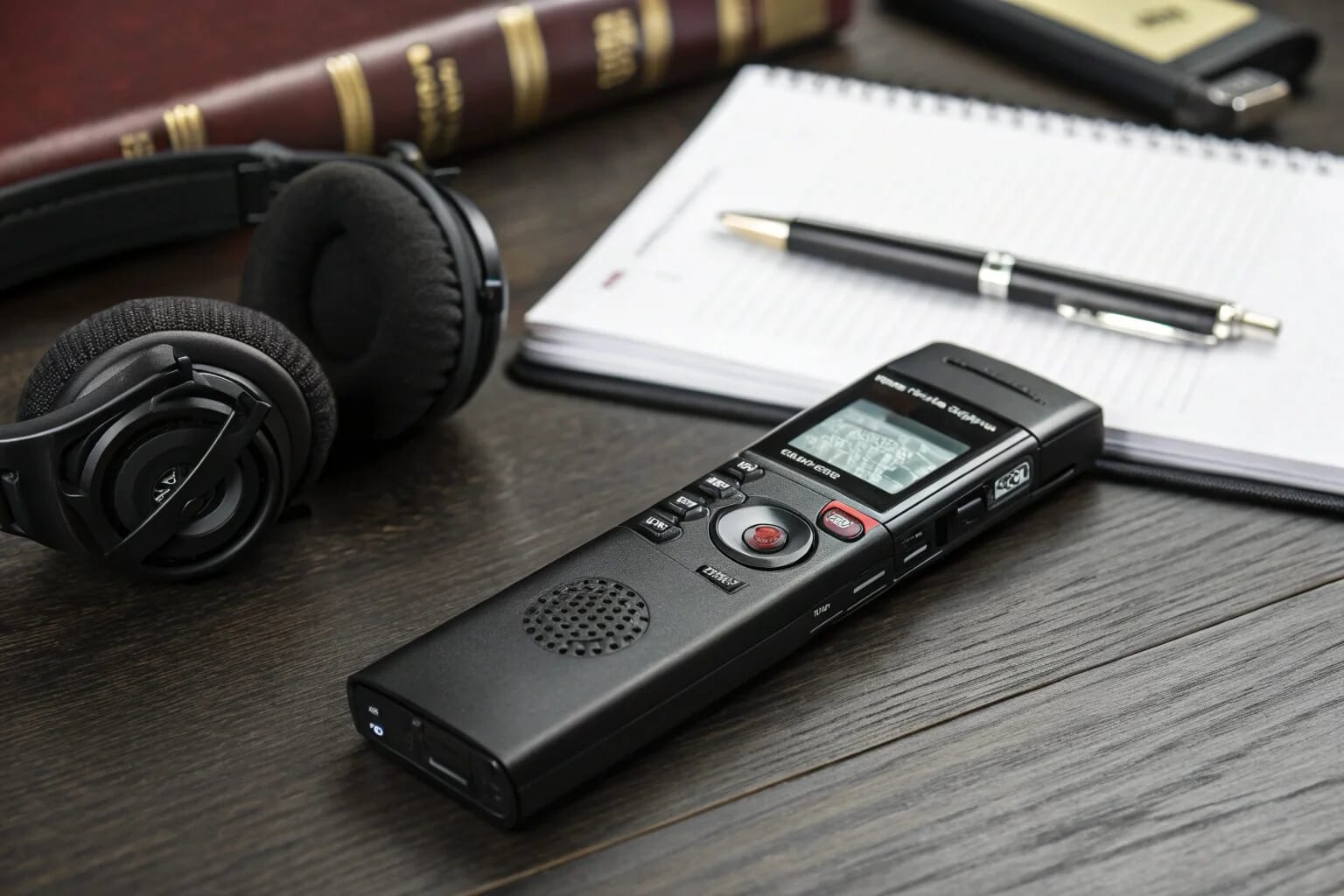
As a manufacturer, I see this trade-off every day. Buyers in Italy and Poland often ask me how to get the longest recording time without sacrificing clarity. The answer isn't just about the biggest battery. It's about understanding the technology inside the device and how to use it effectively. Let's explore the key factors that professional investigators must consider.
What are the four main types of professional voice recorders?
Struggling to find the right recorder form factor? The wrong choice can be bulky, obvious, or impractical for the job. You need a design that fits the specific covert operation.
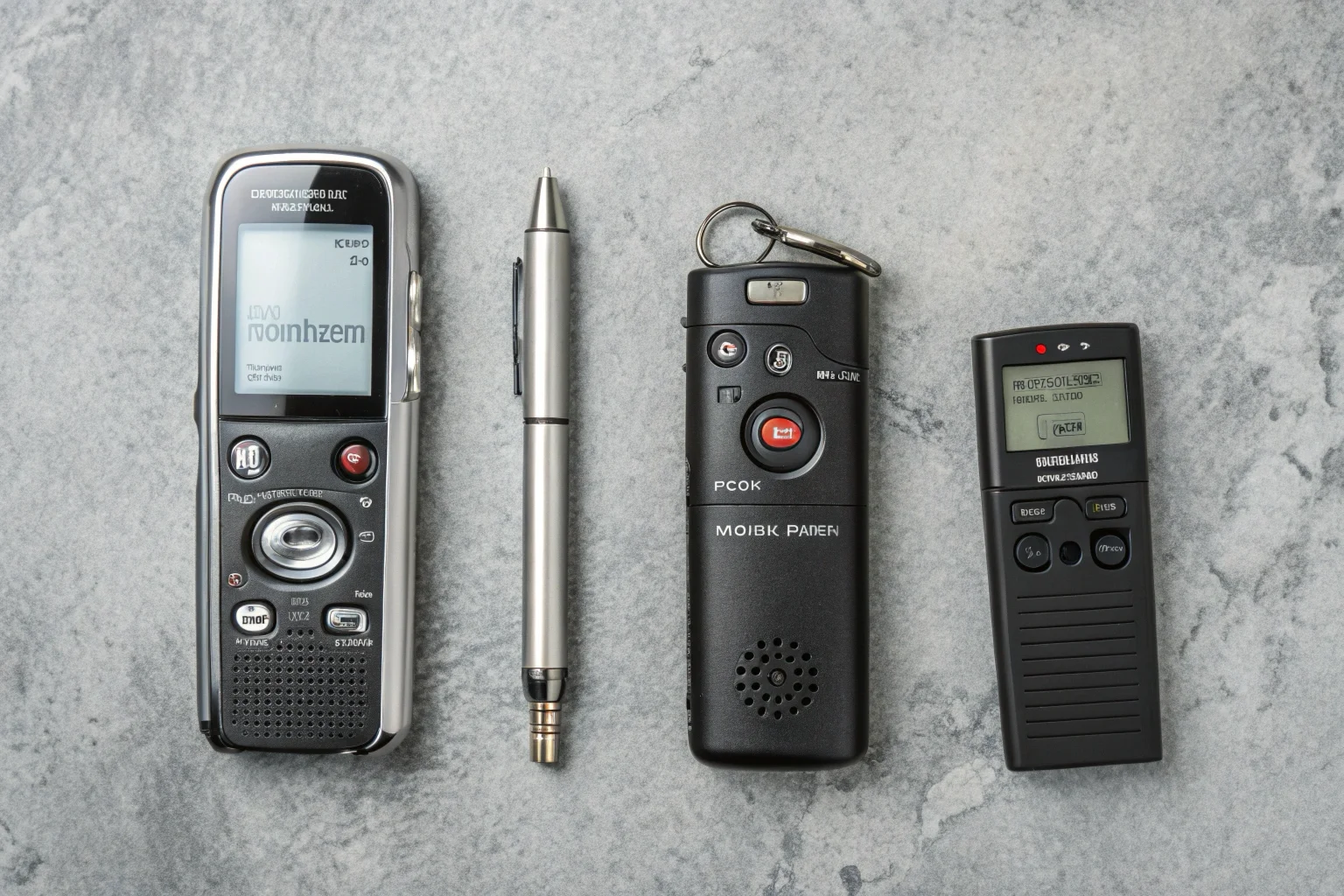
For professional use, voice recorders come in four main form factors: pen recorders, keychain recorders, watch recorders, and classic compact recorders. Each type offers a unique balance of discretion, features, and ease of use for different scenarios.
Dive Deeper
Choosing the right type of recorder is the first step in any successful operation. In my experience working with B2B clients across Europe, the physical design is just as important as the technical specifications. You cannot use a bulky recorder when you need absolute discretion. Here at QZT, we manufacture several types because we know that one size does not fit all. Let's break down the pros and cons of each form factor based on what I see in our production and client feedback.
1. Pen Recorders
These are incredibly popular for business meetings and close-range recording. Their main advantage is that they are fully functional pens, so they never look out of place. We often use durable materials like CNC aluminum alloy for a professional feel. The challenge is fitting a decent battery and microphone into such a slim body. They are perfect for interviews but may have shorter battery life than larger units. For more details on our specific models, you can explore our full range of recording devices at https://q-z-t.com/recording/.
2. Keychain Recorders
These are designed for maximum portability and quick activation. You can attach them to your keys and no one will notice. They are often made from tough zinc alloy to withstand daily use. Models like our Q11 or ZD58 are built for this purpose. They usually feature simple one-button recording, which is essential when you need to start recording without looking. Their small size means the microphone can sometimes be obstructed by other keys, so placement is important.
3. Watch Recorders
For true hands-free, wearable recording, nothing beats a watch. These devices are the peak of covert technology. Many, like our S-series, include an OLED screen that displays the time, making them indistinguishable from a normal smartwatch. The main benefit is that the microphone is always positioned to capture conversations clearly without you needing to hold anything. The trade-off is often a smaller battery, though many models can still record for over 12 hours straight.
4. Classic Compact Recorders
These are the workhorses. They aren't disguised as other objects, so they offer the best performance in terms of battery life and audio quality. Some of our models, like the Q70, can record for over 500 hours. Many feature powerful magnets for easy placement under a desk or in a vehicle. They also tend to have more advanced features like multiple microphone arrays and higher bitrate options, such as the 1536kbps available on our C17 model.
Here is a quick comparison table based on our product lines:
| Recorder Type | Primary Use Case | Common Materials | Key Advantage | Main Limitation |
|---|---|---|---|---|
| Pen | Meetings, Interviews | Aluminum Alloy | Plausible deniability | Smaller battery |
| Keychain | On-the-go, Quick start | Zinc Alloy, ABS | Extreme portability | Mic can be muffled |
| Watch | Hands-free, Wearable | Zinc Alloy, ABS | Unmatched discretion | Limited battery size |
| Compact | Long-term, High-quality | Metal, Polymer | Max performance/battery | Less covert design |
AAA Li-ion or NiMH: Which battery is better for covert recorders?
Worried your recorder will die mid-operation? Using consumer batteries like AAAs is unreliable and bulky. For professional work, you need a power source that is compact, efficient, and long-lasting.
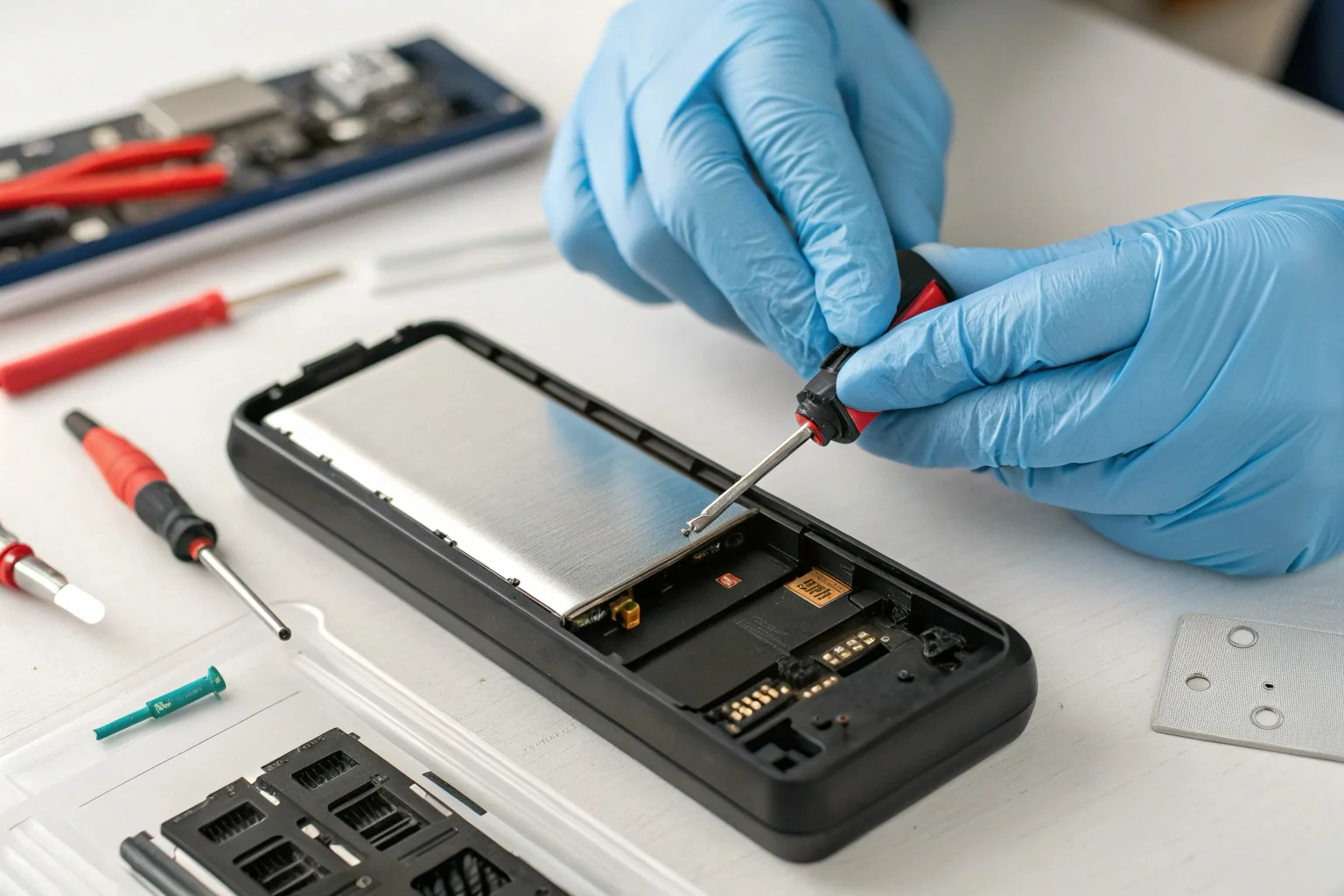
Neither is ideal. Modern professional covert recorders don't use replaceable AAA batteries. They use integrated Lithium-Polymer (Li-Po) batteries. Li-Po offers the best size-to-power ratio, enabling small devices to achieve hundreds of hours of recording time and easy recharging via USB.
Dive Deeper
When professional buyers from France or Germany visit our factory in Vietnam, they are often surprised by the technology inside our devices. The conversation about batteries is a great example. While NiMH and Li-ion AAA batteries have their uses in consumer electronics, they are completely impractical for high-performance covert recorders. The entire industry has moved to integrated Lithium-Polymer (Li-Po) or Lithium-ion (Li-ion) pouch cells, and for very good reasons.
First, space efficiency is everything. A device disguised as a pen or a car key has no room for a cylindrical AAA battery. A Li-Po battery is a flat, flexible pouch that can be shaped to fit into any tiny space available. This allows us to make our recorders smaller and more discreet without sacrificing power. For example, our X20 recorder is only 50x20x10mm and weighs 10 grams, which would be impossible with older battery types.
Second, power density is critical. A small Li-Po battery can hold significantly more charge than a NiMH battery of the same weight. We measure this in milliampere-hours (mAh). Our watch recorders have batteries around 110-130mAh, which is enough for 20 hours of continuous recording. Our larger compact recorders, like the Q70, have much bigger integrated batteries that allow them to run for up to 30,000 minutes (500 hours). This level of performance is simply not achievable with replaceable batteries.
Finally, convenience and reliability are key. All our professional recorders are rechargeable via a standard USB port, often Type-C for modern convenience. This means you can charge them anywhere—from a laptop, a power bank, or a wall adapter. There is no need to carry spare batteries. An integrated battery is also more reliable, as there are no contacts to get dirty or springs to fail, which is a common point of failure in cheaper devices.
How can I improve the sound quality of a recording?
Is background noise ruining your audio files? Capturing poor-quality sound makes analysis difficult and unreliable. You need to ensure your primary evidence is as clean and intelligible as possible.
To improve sound quality, choose a device with a high recording bitrate (at least 192Kbps) and a quality microphone. For best results, place the recorder close to the source, avoid obstructions, and use features like Voice-Activated Recording (VOR) to reduce background noise.
Dive Deeper
As a manufacturer, I can tell you that audio quality comes from two places: the hardware inside the device and the way you use it. Many people think buying the most expensive recorder will guarantee perfect audio, but that's only half the story. I always advise my clients to focus on three key technical aspects and then on proper operational procedure.
Hardware Factors for Clear Audio
-
Bitrate (kbps): This is the amount of data used to create one second of audio. A higher bitrate means more detail is captured. Many standard recorders use 192Kbps, which is very good for voice. For evidentiary purposes where every nuance matters, models offering 256Kbps or even 1536Kbps, like our C17, provide crystal-clear, uncompressed sound. The trade-off is that higher bitrates create larger files and use more battery.
-
Microphone Type: The microphone is the ears of your recorder. A simple omnidirectional mic is good, but more advanced devices use multi-directional microphone arrays (like the "三向麦克风" or three-way microphone in our A7 model). These can capture sound from a wider area with greater clarity. The quality of the microphone component itself is a huge factor, which is why we focus on mid-to-high-end components.
-
Signal-to-Noise Ratio (SNR): This measures the level of the desired audio signal compared to the level of background noise (hiss). A higher SNR value means a cleaner recording. For instance, our L-1 pen recorder has an SNR of over 80dB, which is excellent for its category and results in very low internal electronic noise.
Operational Best Practices
- Placement: The closer the microphone is to the sound source, the better. Avoid placing it in a pocket under thick clothing or in a bag where it can be muffled.
- Environment: Record in the quietest environment possible. Turn off fans, radios, and televisions. If you are in a car, the engine and road noise will be a factor.
- Voice Activation (VOR): Many of our devices support VOR ("支持声控"). This feature pauses recording during silent periods. It not only saves battery and storage space but also makes the final audio file much easier to review, as you don't have to listen through hours of silence.
Ultimately, the best quality comes from a high-performance device used with skill and awareness of the recording environment.
How do I choose a good voice recorder necklace for business?
Need a discreet recorder that is always on you? A standard device is easy to forget or misplace. A wearable recorder that doubles as a business accessory is the perfect solution.
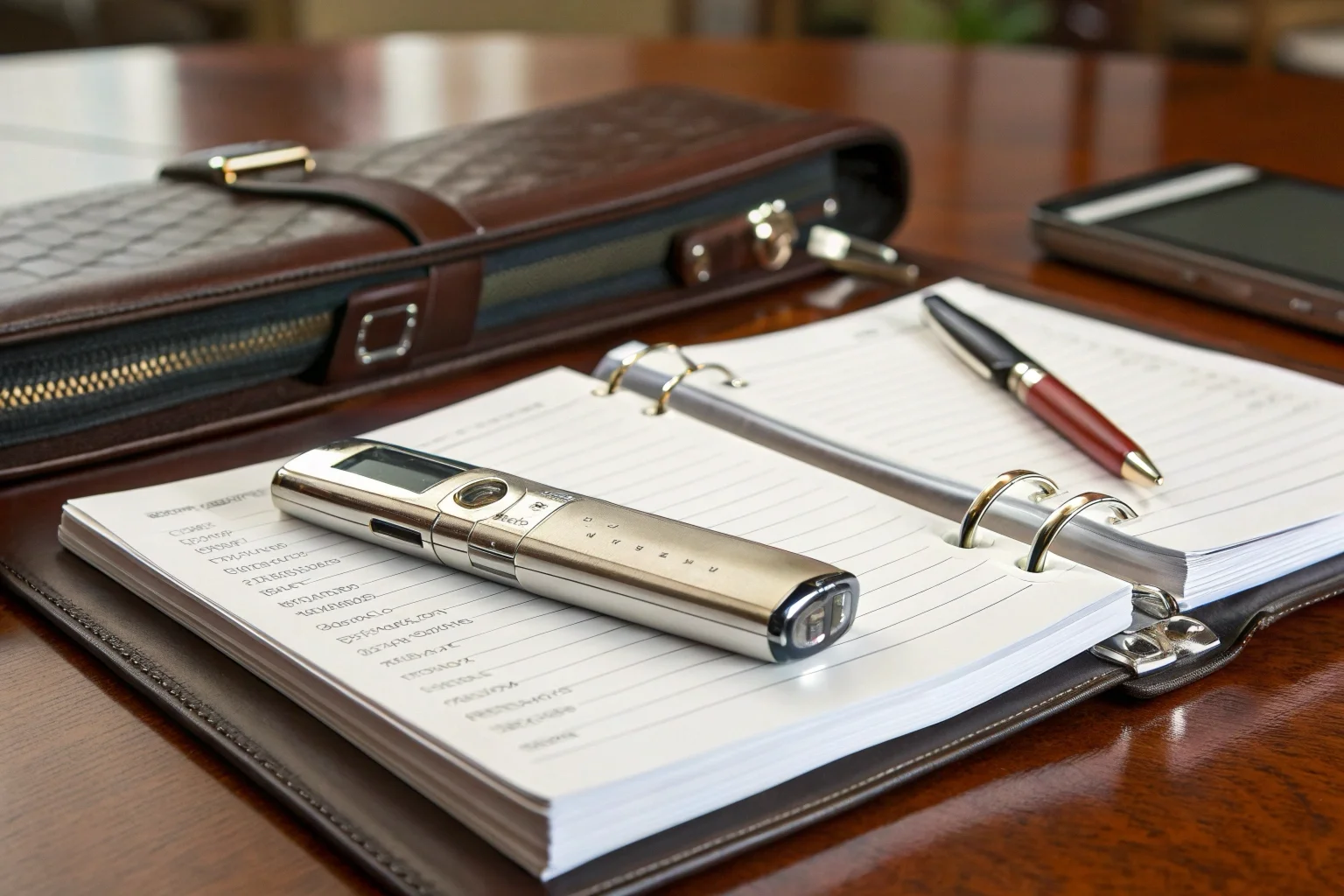
While "necklace" recorders are rare, the principle applies to other wearables like watches or elegant pens. For business, choose a device made from high-quality materials like zinc or aluminum alloy. Prioritize one-touch recording for ease of use and ensure it has sufficient battery life for your meetings.
Dive Deeper
The concept of a "voice recorder necklace" is about combining function with professional aesthetics and discretion. While we don't manufacture necklaces specifically, I guide many of my B2B partners in choosing devices that serve the same purpose: a recorder that can be worn or carried openly in a business setting without attracting any attention. The best options are our high-end watch and pen recorders.
When selecting a wearable recorder for business, here are the criteria my most experienced clients, especially those from our Italian and South Korean markets, focus on:
Material and Build Quality
The device must look and feel like a premium accessory. A cheap plastic recorder will look out of place with a business suit. This is why we use materials like CNC-machined aluminum and polished zinc alloy in our V11 and S5 models. It has to pass a casual inspection and feel like a quality item, not a cheap gadget. The finish, weight, and durability are all part of its disguise.
Simplicity of Operation
In a meeting or negotiation, you cannot be fumbling with complex controls. The best wearable recorders feature simple, one-touch recording ("一键录音"). You should be able to start and stop recording by feel alone, without ever looking at the device. A discreet slide switch or a subtle button press is ideal. This simplicity ensures you can capture what you need without breaking conversation or appearing distracted.
Performance and Reliability
Even in a discreet package, performance cannot be compromised. The device must have a battery that can last through a full day of meetings. Our S10 watch recorder, for example, offers up to 20 hours of working time from a single charge. Audio quality is also paramount. Look for a clear bitrate of at least 192Kbps to ensure conversations are captured intelligibly. Finally, for any electronic device sold in Europe, especially one worn on the body, it is critical to ensure it has genuine CE certification. We provide this for all our relevant products, which is a key reason why long-term partners trust us. A non-certified device is a business risk you shouldn't take.
In summary, choosing a good business wearable is about balancing aesthetics, ease of use, and solid technical performance.
Conclusion
Balancing audio quality, battery, and design is key. Choose the right form factor and specifications for your mission to ensure reliable, clear evidence capture every single time.

 English
  Italiano
  Deutsch
  Français
  Español
  Polski